![Ramp_Logo_Saphire-Nov-06-2023-11-33-51-7748-PM.png]](https://support.ramprfid.com/hs-fs/hubfs/Ramp_Logo_Saphire-Nov-06-2023-11-33-51-7748-PM.png?height=39&name=Ramp_Logo_Saphire-Nov-06-2023-11-33-51-7748-PM.png)
The File Upload function allows users to upload files from their PC to the Ramp Web Portal to create, update and delete data.
Creating the Upload File
Before uploading, you will need to prepare a CSV file with the correct column headers. The system matches column headers to record properties by name, so getting the naming right is critical.
Example Templates
Use these standard templates to get started with uploading data to Ramp's system.
Editable fields and mapping names
Only some fields available in the Ramp Web Portal are able to be edited. Please refer to the entity mappings below for fields that can be edited. If the field is not there, then it may not be able to be edited.
The column headers in your CSV must match the system's field names exactly. Column headers are case-sensitive and must not contain leading or trailing spaces.
Items
| Display Name | CSV Column Header | Notes |
| Name | Name | |
| SKU | SKU | Required; choose single SKU or tick Allow Multiple Skus. |
| Description | Description | |
| Tag Type | TagType | |
| Tag Number | TagNumber | |
| Asset Number | AssetNumber | |
| Quantity | Quantity | |
| Unit Cost | UnitCost | |
| Place | Place | Required; choose reference field mapping (name is recommended). |
| Assigned Place | AssignedPlace | |
| Department | Department | |
| Person | Person | |
| Parent Item | ParentItem | |
| {Extended Property} | N/A |
SKUs
| Field | CSV Column Header | Notes |
| Name | Name | Required |
| Description | Description | Optional |
| Sku Number | SkuNumber | Required |
| Barcode | BarcodeNumber |
If encoding RFID tags from SKUs, then this is a GS1 GTIN-13 barcode, made up of a company prefix, item reference, and check digit. Check that the number is formatted as a whole number, not a decimal or scientific notation. |
| Encoding Type | EncodingType |
Choose from Sgtin, Grai, Custom Prefix, or None. |
| Indicator | Indicator |
Only requiredif Encoding Type is Sgtin. The first digit of a product’s GTIN-14 number. It is to show how a product is packaged - use 0 for a single item, and higher numbers for other packaging types. |
| Company Prefix | CompanyPrefix | Only required if Encoding Type is Sgtin or Grai. Part of the barcode, between 6-12 digits long. |
| Item Reference | ItemReference | Only required if Encoding Type is Sgtin or Grai. Part of the barcode, must be unique in the system, between 0-6 digits long. |
| Custom Prefix | CustomPrefix | Only required if Encoding Type is Custom Prefix. |
| Item Code | ItemCode | Optional |
| SKU Type | SkuType | Choose from Standard, Variable Percent, or Variable Quantity. |
| Is Sku Level Cost? | SkuLevelCost |
If the unit cost is controlled by the Sku, set to TRUE. If the unit cost depends on the item, set to FALSE |
| Unit Cost | UnitCost | Optional, only available if it has been set to Sku Level Cost. |
| {Extended property} | {Match exactly, including spaces} |
Modify if an extended property is a sku level property or item level property by appending "|IsSkuLevelProperty" and setting this to TRUE or FALSE. Note: If you are trying to update an extended property that has the same name as a classification field, then add a "|" character to it. E.g. "Colour|". |
Places
| Display Name | CSV Column Header | Notes |
| Name | Name | Required |
| Template | Template | Required; choose reference field mapping. |
| Description | Description | |
| Place Code | PlaceCode | |
| External Reference | ExternalRef | |
| Tag Type | TagType | |
| Tag Number | TagNumber | |
| Parent Place | ParentPlace | |
| Priority | Priority | |
| Zone Colour | ZoneColour | |
| Gln | Gln | |
| Current Item Count | CurrentItemCount | |
| {Extended Properties} | {Extended Properties} |
Persons
| Display Name | CSV Column Header | Notes |
| Given Name | GivenName | |
| Surname | Surname | |
| Tag Type | TagType | |
| Tag Number | TagNumber | |
| Place | Place | |
| Assigned Place | AssignedPlace | |
| Department | Department | |
| {Extended Properties} | {Extended Properties} |
Collections
| Display Name | CSV Column Header | Notes |
| Name | Name | |
| Description | Description | |
| Active | Active | |
| {Extended Properties} | {Extended Properties} |
Order
| Display Name | CSV Column Header | Notes |
| Order Number | OrderNumber | Required |
| Order Type | OrderType |
Required Choose from Inbound, Outbound, Transfer, Loan |
| From Place | FromPlace |
Required if Order Type is Transfer or Outbound. Use Reference Field Mapping to link to GLN, Place Code, Tag Number, or Name. |
| To Place | To Place |
Required if Order Type is Inbound, Transfer, or Loan. Use Reference Field Mapping to link to GLN, Place Code, Tag Number, or Name. |
| Sku | Sku | Use Reference Field Mapping to link to Name, Sku Number, or Barcode Number. |
| Item | Item | Use Reference Field Mapping to link to Asset Number, Tag Number, or Name. |
| Deliver To | Deliver To | Person |
| Comments | Comments | |
| Order Quantity | OrderQty | Quantity of Skus |
| Pick Sequence | PickSequence | |
| PackSequence | PackSequence | |
| External Reference | ExternalRef | |
| Enable Order From Place Constraint | EnableOrderFromPlaceConstraint | |
| Include Order From Place Children | IncludeOrderFromPlaceChildren | |
| Order Receipt Constraint | OrderReceiptConstraint | |
| Order From Place Action | OrderFromPlaceAction | |
| Order Qty Constraint Action | OrderQtyConstraintAction | |
| Enable Custom Property Constraint | EnableCustomPropertyConstraint | |
| Auto Receive Order | AutoReceiptOrder | |
| {Extended Properties} | {Extended Properties} |
Service Records
| Display Name | CSV Column Header | Notes |
| Service Number | ServiceNumber | |
| Notes | Notes | |
| Requested Quantity | RequestedQty | |
| Adjusted Quantity | AdjustedQty | |
| Manual Quantity | ManualQty | |
| Date Completed On | CompletedOn | |
| Attribute1/Attribute2/Attribute3 | Attribute1/Attribute2/Attribute3 | |
| Service Master | ServiceMaster | |
| From Place | FromPlace | Choose reference field mapping (name is recommended). |
| To Place | ToPlace | Choose reference field mapping (name is recommended). |
| Reason | Reason | |
| {Extended Properties} | {Extended Properties} |
Accessing the File Uploader
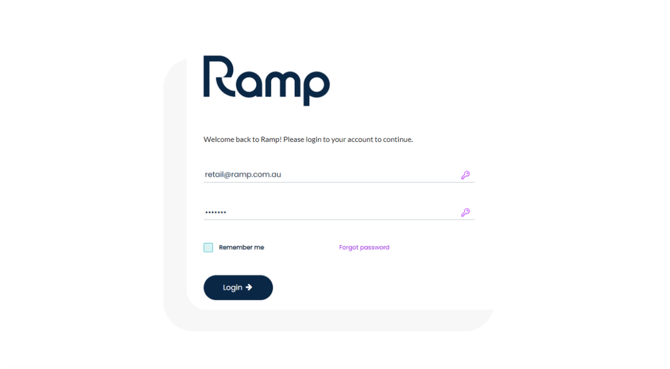
- Open the Ramp Web Platform via https://locafi-retail.com and login using your given credentials.
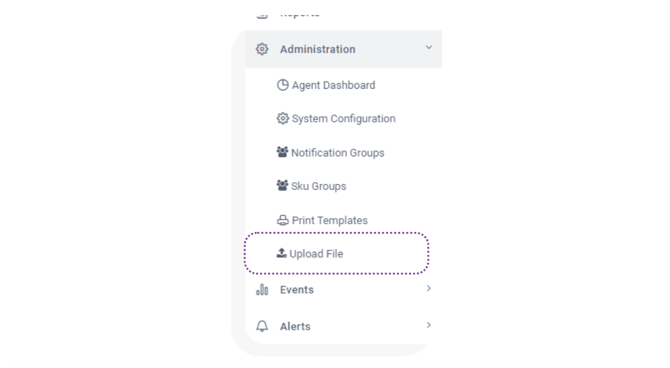
- From the navigation menu, open the Administration group followed by Upload File.
Selecting the File
Before continuing, it is recommend to generate your file as a CSV file.
- On the File Upload page, press the Select File button to select a file.

- A windows dialogue picker will appear. Navigate to the folder and select the CSV file you intend to upload.
- Once selected, you can set the delimiter type based on the file that you've chosen.
- Comma: This option is set by default, and is commonly used with CSV files.
- Tab: This option is set for tab-delimited files, such as TSV files.
- Custom: If the file is set with a custom delimiter, users can select this option and provide the delimiter in the text box.
Selecting a Template
Once a user has selected a file, they also have the option of selecting a upload template, which will load any preconfigured settings as part of the upload operation.
The templates will be split into 2 categories.
- My Templates: These templates are unique to the currently logged on user and can only be seen by them.
- Global Templates: These templates are visible to all users.
To select a given template, click Load to load the template and continue with the upload operation. Refer to How to Configure Templates for File Upload for more information.
To create a new import with no settings, click New Import.
These buttons will only be available once a file has been selected.
In both cases, the screen will continue onto the Upload Settings page.
Configuring Settings
Refer to How to Configure Templates for File Upload for more information about configuring the settings for an upload.
Completing the Upload
Click Upload to complete the upload. Ramp will begin processing the file.
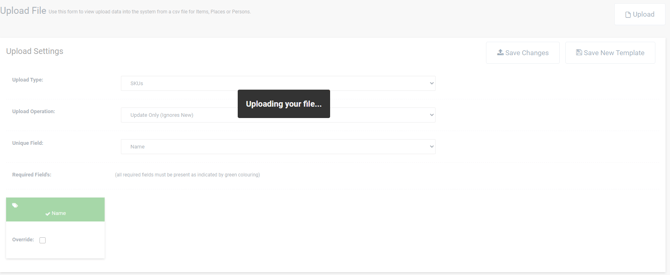
When you upload a file, you will need to wait for the entire upload to complete before continuing. Large files with 1000+ rows may take minutes to upload.
Once it has successfully completed, a small green notification will appear in the top right corner.
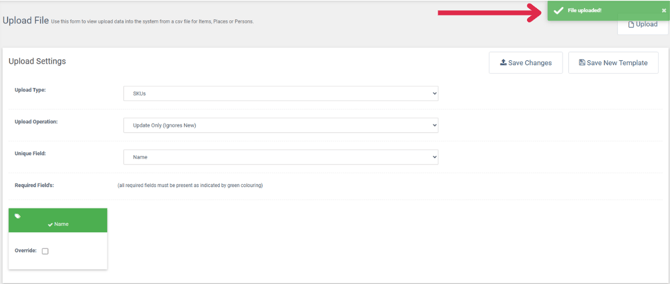
Scroll down to the records and you can see the result of each individual record.

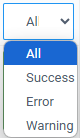
You can use the filter to check if there were any records that returned a warning or error.
Upload Errors
Sometimes when you upload, there may be an error that occurs that prevents the upload process from completing.

Most of the time, it will be an error in a specific field of a record
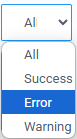
To check where the error occurred, scroll down to the records and filter for error.
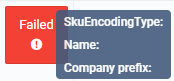
The records that failed will look like this:

If you hover your mouse over the red background, a tooltip will show you which fields caused the error. You will need to check the fields and correct them in the spreadsheet, before reuploading it.
If you are still having issues, please contact the Ramp Support team with the details of your issue.